

Our History


About the Architecture
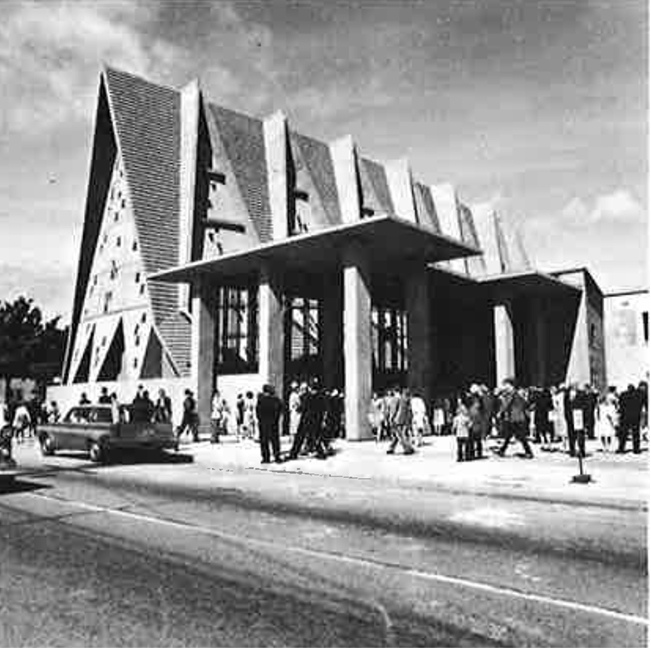
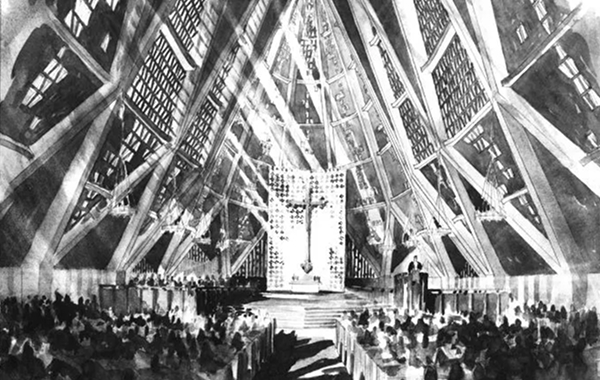
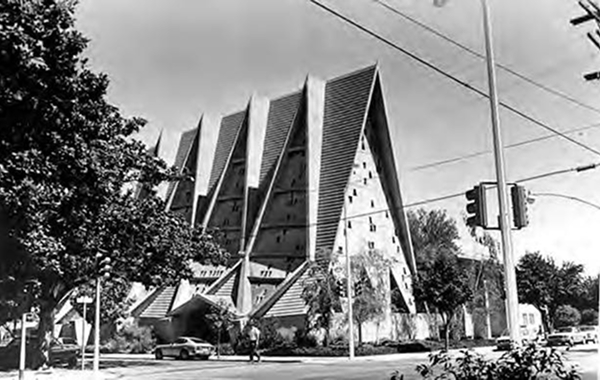
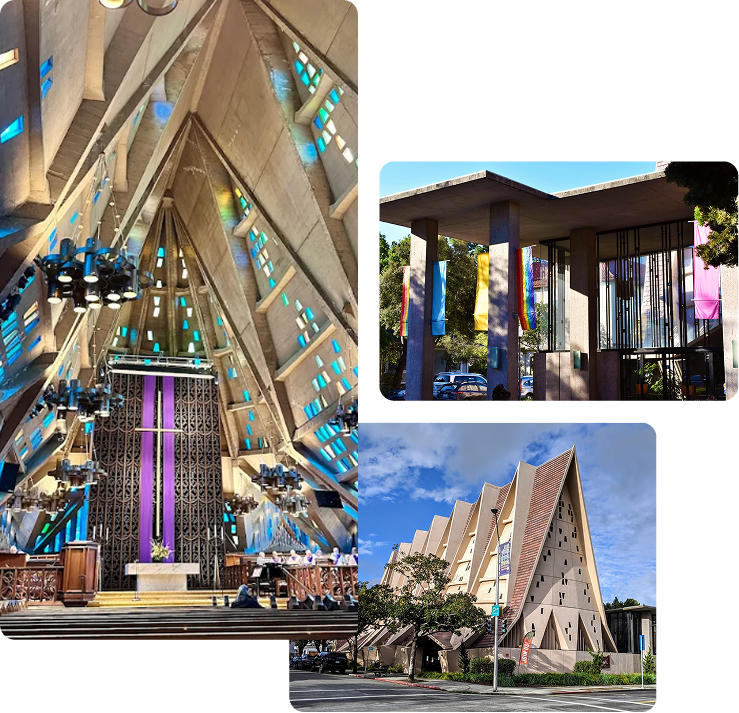
The “bones” of the new sanctuary were 19 massive poured-in-place concrete piers that extend upward from beneath the basement-level to meet 73 feet above the main aisle. Other basic structural elements were poured in place except the roof panels, which were precast, raised by a crane, and tied together at the ridge. The roof pieces contain 1,500 brilliantly hued small glass inserts. To ensure good acoustics, the face of the balcony was undulated. The unique circular motif lighting fixtures, made of spun steel with a brass finish, weigh 600 pounds and were bolted to the roof.
Inside the sanctuary, an enormous hand-carved reredos (screen) frames the cross. The circle, without beginning and end, a symbol for expressing the eternalness of God, can be seen on the reredos, in the railings and the ends of the pews, and in the light fixtures. Each candelabra represents the three lights of the Trinity. The communion table and baptismal font are made of white Vermont marble.
The 14,000-square foot lower level comprises meeting and storage rooms, a kitchen, and two sunken gardens, including what is now the Memorial Garden.
The building process took two years and cost approximately $1,350,000 inclusively. This would be the only church building Steiner ever designed.
“This architecture exemplifies what should be true of the life of every Christian: that it is founded on the heritage of the past, but takes always new forms relevant to the present age.“
— Robert Lee Stuart
Dwelle Chapel
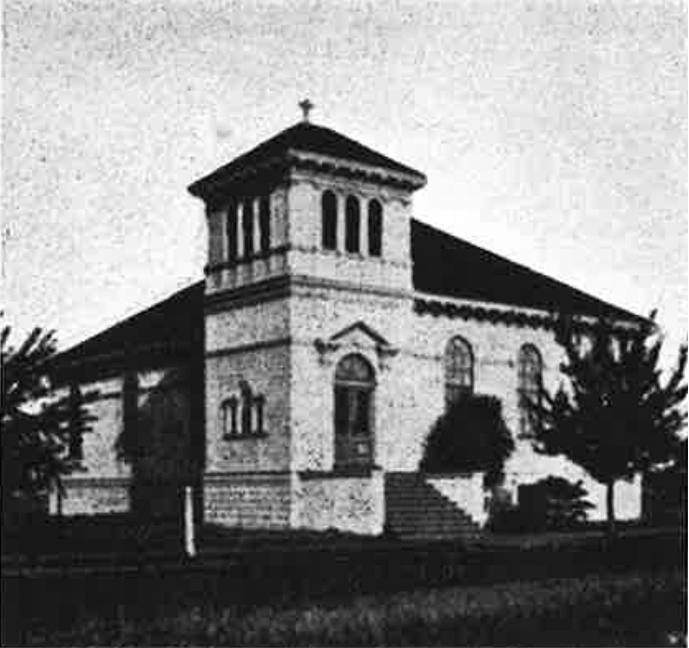
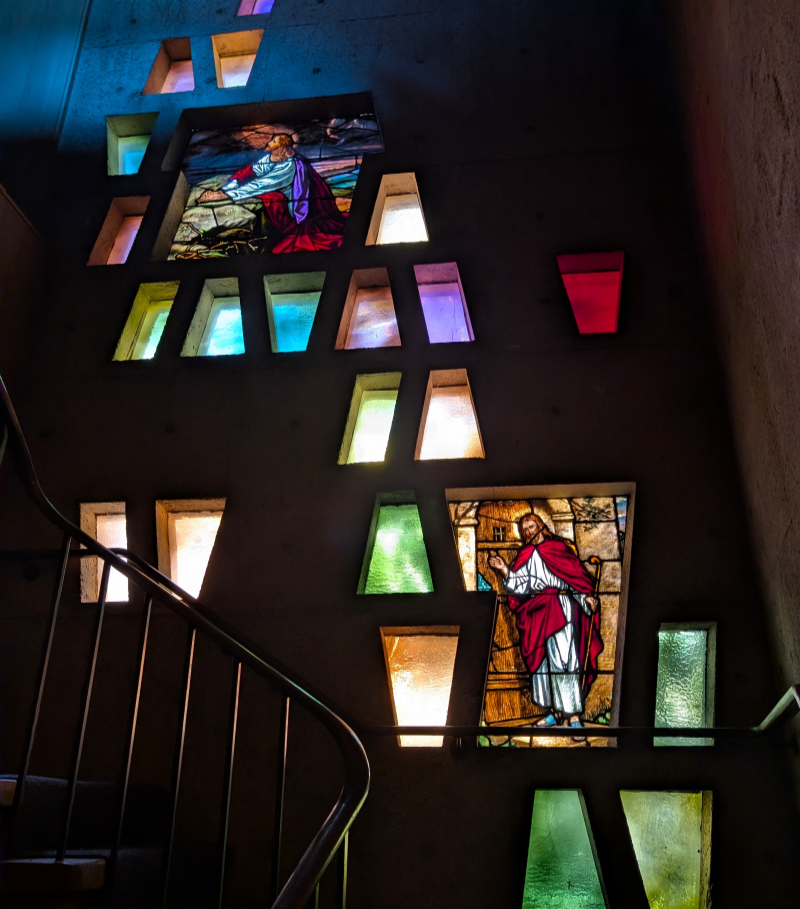
Adjacent to the sanctuary, the simple, intimate 140-person capacity Dwelle Memorial Chapel was constructed. Architecturally conventional, it utilized several items from the prior stucco church: altar, pulpit, communion rail, and two beautiful stained glass windows: “Christ Kneeling in Gethsemane” and “Christ Knocking at the Door of Everyman’s Life.”

Merritt C. Speidel
Memorial Organ
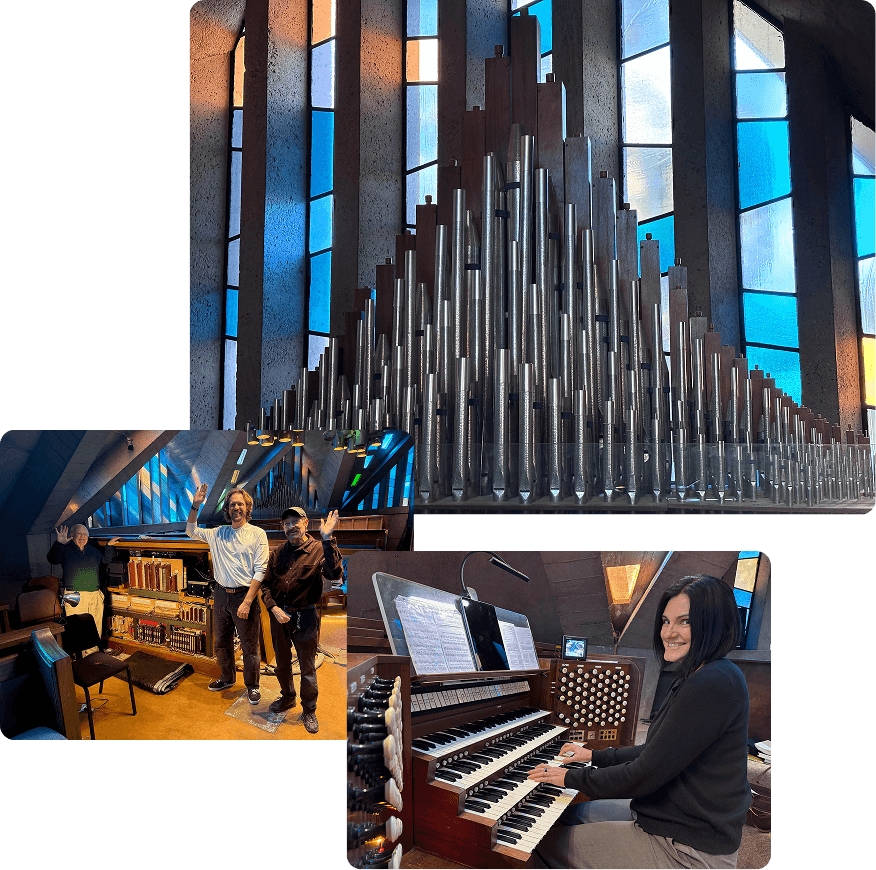
The Merritt C. Speidel Memorial Organ, recently extensively renovated and enhanced, occupies a unique niche as one of the largest organs in the Bay Area, with more than 6,300 pipes. Named for Merritt C. Speidel, the principal donor, it was installed when the new sanctuary was constructed. The organ is capable of satisfying the requirements of all liturgical and concert literature. It also can render 19th and 20th century organ literature with distinctive flair and fidelity. It is joined in the chancel section of the sanctuary by a Bosendorfer grand piano.